How to get rid of fleas in the house in Sacramento
You treated the dog, and a week later fleas are still biting your ankles. That usually means the fleas are living in the house as well as on the pet.
The UC Statewide IPM Program’s Pest Notes on fleas explain why. The flea on a California dog or cat is most likely the cat flea, and the adults stay on the animal. The eggs fall off into bedding, carpet and furniture, hatch in two to five days, and the next generation grows up there.
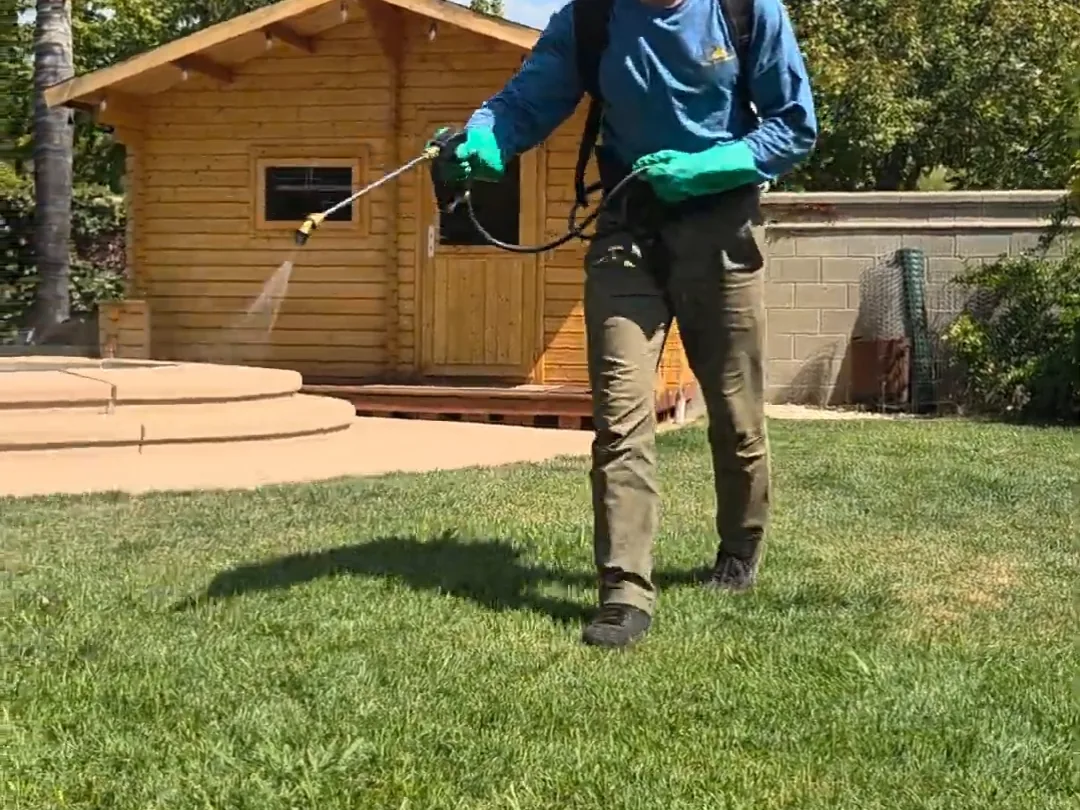
So getting rid of fleas in the house means working on three places at once: the pet, the indoor spots where it rests, and any shaded ground outside where it lies down. Our flea and tick treatment covers the house and the yard. The pet itself is a job for your vet.
Start with the pet, through your vet
UC IPM puts three kinds of pet product above the older shampoos, powders, dips and sprays, both for how well they work and for safety: spot-on drops, pills or food treats from a vet, and flea collars. Oral and topical products started early in the year, before numbers build, can stop fleas settling into a home in the first place. Ask your vet which one suits your animal.
Find where the fleas are breeding
Flea larvae collect where the pet sleeps. UC IPM says you usually won’t find them in busy walkways or sunny spots; they sit where adult fleas have left dried blood and droppings. Start with the dog bed, the cat’s chair and the rug by the back door.
Outside, the notes single out the Central Valley: flea numbers can get very high in shaded, sheltered places such as animal enclosures, crawl spaces where stray animals sleep, and planting right against the house. One check they suggest is to pull white socks up to your knees and walk through the places your pet rests. Fleas jump on and show up against the white.
Vacuum on a schedule for two weeks
Vacuuming does more than people expect. According to UC IPM it kills larvae in the carpet, picks up adults, and prompts fully formed fleas to leave their cocoons. The routine in the notes:
- Vacuum floors, rugs, carpets, upholstered furniture and the cracks along baseboards and cabinets every day or every other day.
- Pull the cushions off and vacuum underneath them, and get under the furniture.
- Wash pet bedding in hot, soapy water at least once a week, and wash throw rugs as well.
- Clean any used rug or sofa before it comes into the house.
The two weeks matter because of the cocoon. Even a carpet spray with an insect growth regulator, a product that acts on flea eggs and young fleas, kills larvae but not pupae, so new adults keep appearing for about two weeks after a treatment. UC IPM says to keep vacuuming through that stretch and to hold off on another treatment for at least several weeks.
Why a fogger often disappoints
Room foggers don’t give the coverage or lasting effect of a direct spray, the notes say, unless they contain methoprene or pyriproxyfen. Larvae live at the base of the carpet fibers, and UC IPM says treatments without an insect growth regulator often never reach them.
The yard is similar. A whole-lawn spray is seldom needed; treatment belongs where the pet rests, such as the doghouse, under the deck and along the foundation. UC IPM also notes that many outdoor cat flea populations are resistant to pyrethroids, a common group of insecticides that includes permethrin.
When to call us
Call if the fleas keep coming after the pet is on a vet product and you have kept up the vacuuming, or if you can’t tell where outside they are coming from. We treat the indoor areas where the pet spends time and the yard spots it actually uses.
Major flea infestations are on the exclusions line of all three plans on our pricing page. If the house is already heavily infested, say so when you call (916) 818-3863 and the office will tell you how it can be handled. It helps to tell us which rooms are affected, where the pet sleeps inside and out, and whether the house has a crawl space.
Source: UC IPM Pest Notes: Fleas (UC ANR Publication 7419), checked 7 October 2026.
Ready for help with fleas? Request a quote through our contact page or call (916) 818-3863, Monday to Saturday, 7am to 6pm.

Residential and commercial pest control. Local technicians treating homes and businesses across Sacramento and the surrounding area.
Services
Service areas
Contact
- Summit Pest Control
- (916) 818-3863
- info@summit-pest-control.com
- 432 Todhunter Ave, West Sacramento, CA 95605
Serving the Sacramento area - Mon-Sat: 7am - 6pm
© 2026 Summit Pest Control. All rights reserved.