Ants inside after the first rain in Elk Grove: what to check and how ant control works
UC IPM lists flooded conditions, along with hot, dry weather, among the reasons ants move into buildings. In Elk Grove both can happen within a few months: a nearly dry summer, then the first rains of fall.
The weather record shows how sharp the change is. At the NOAA station at Sacramento Executive Airport, north of Elk Grove, the 1991-2020 normal rainfall is 0.00 inches in July, 0.04 in August and 0.09 in September. October brings 0.85 inches and November 1.66.
If a trail shows up along a baseboard after a storm, this guide covers what to check outside and inside, and how our ant control treats where the ants come from, not only the line on the counter.
Why a rain sends ants indoors
UC IPM’s Pest Notes on ants say ants come inside for food and water, for warmth and shelter, or to get away from dry heat or flooded ground. They can appear suddenly when food outside runs out or the weather changes.
The ant you are most likely to see is the Argentine ant, which the notes call the most common ant in and around California homes. Its nests are often shallow, just under the soil surface, though it digs deeper in dry conditions. The colonies are linked into one large supercolony with many queens, so wiping out one trail does not end it.
The days with rain add up quickly after October. The same NOAA normals show a tenth of an inch or more of rain on about 1.8 days in October, 3.9 in November and 6.3 in December.
What to check outside first
Most ants live outdoors, UC IPM says, so the work is keeping them from entering. Walk the outside of the house and look for:
- mulch, grass or plants touching the foundation (the notes say to keep them at least a foot back)
- a leaky outdoor faucet or a broken sprinkler head, both of which draw thirsty ants
- shrubs covered in aphids, scales or mealybugs, and ripe fruit on trees close to the house
- trails running along pipes and wires where they enter the wall
- cracks around the foundation that can be caulked
The honeydew point matters more than it looks. Ants tend aphids and scales for the sugary honeydew they produce, and UC IPM says this protects those insects from their natural enemies. A shrub full of aphids beside the back door keeps a trail fed.
What to do inside
Wipe the trail with a sponge and soapy water as soon as you see it. UC IPM says this removes the scent trail the ants follow, and that vacuuming or mopping can work as well as a spray for clearing the ants you can see.
Then find where they come in and caulk it. Put sugar, syrup, honey and pet food in closed containers, washed on the outside. If the ants are in a potted plant, the notes suggest taking it outdoors and soaking the pot for 20 minutes or more in 1 to 2 tablespoons of insecticidal soap per quart of water.
Skip the indoor spray. UC IPM says spraying ants indoors will not stop more of them coming in, and that indoor sprays usually are not needed.
Baits, sprays and what lasts
UC IPM calls baits the key tool for ants. Workers carry the bait back to the nest and share it with the larvae and queens, so it can take out the colony. It is slow on purpose, and the notes say it can take 5 to 10 days to see fewer ants. Sweet baits draw Argentine ants all year.
A spray along the foundation is different. The notes say it kills only the foraging ants, which are a small part of the colony, and the ants build back up. The California Department of Pesticide Regulation also limits pyrethroid perimeter treatments because of water quality concerns.
Timing helps. UC IPM suggests learning the seasonal cycle of ants in your area and getting ready for the yearly invasion by caulking and baiting before it starts.
How our ant control works in Elk Grove
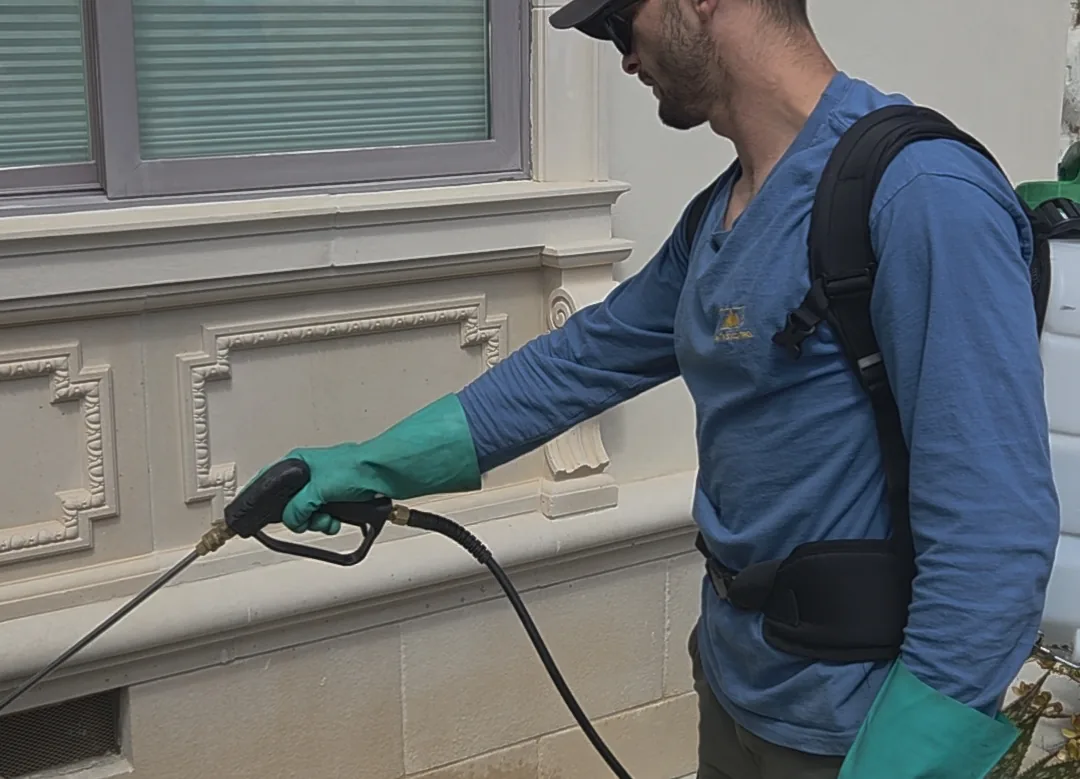
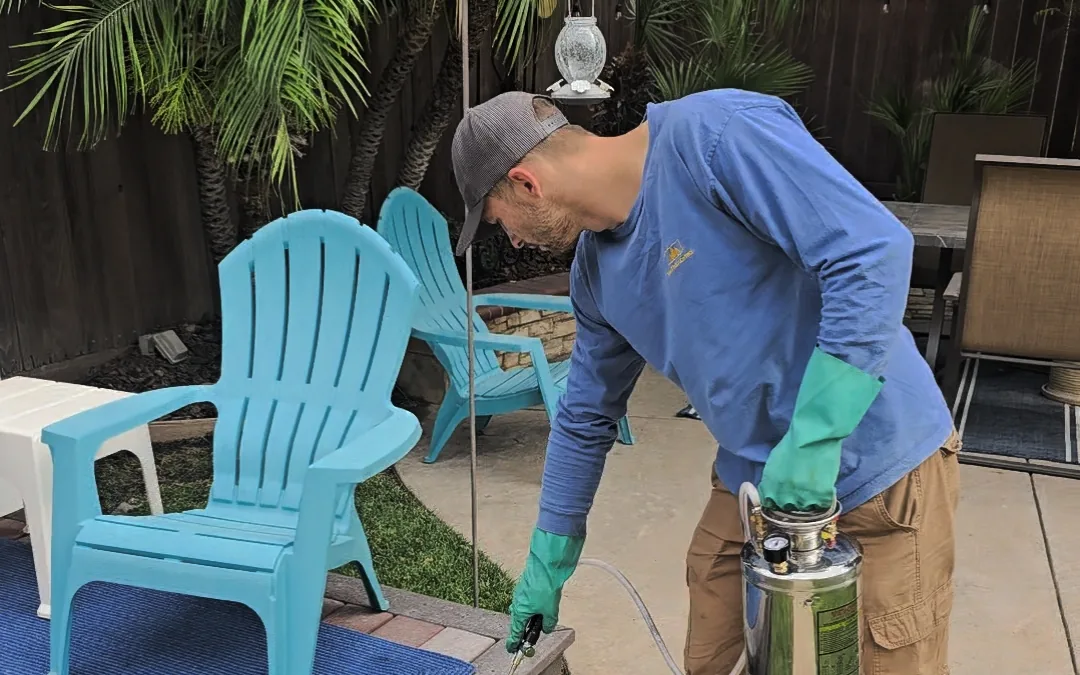
A technician follows the trail back to where it enters and, where possible, to the nesting area. We treat the nesting and entry areas around the outside of the house, treat inside only where there is an active trail, and seal gaps at slab edges and around pipes and wires where we can. Ask what is being applied and where, and how long to keep children and pets off treated areas.
Ants are covered on all three of our plans, and the bi-monthly plan includes free callbacks between visits. For everything else we treat in town, see pest control in Elk Grove.
Before the visit, write down where the trail enters, the date it started and whether it followed a rain, and any product you have already used. Keep the label or a photo of it.
Sources: UC IPM Pest Notes: Ants (UC ANR Publication 7411). NOAA NCEI U.S. Climate Normals, 1991-2020, monthly precipitation for Sacramento Executive Airport (station USW00023232). Both were checked 13 October 2026.
Ants back after the rain? Request a quote through our contact page or call (916) 818-3863, Monday to Saturday, 7am to 6pm.
Related: ants that keep returning to the kitchen. More pest control guides

Residential and commercial pest control. Local technicians treating homes and businesses across Sacramento and the surrounding area.
Services
Service areas
Contact
- Summit Pest Control
- (916) 818-3863
- info@summit-pest-control.com
- 432 Todhunter Ave, West Sacramento, CA 95605
Serving the Sacramento area - Mon-Sat: 7am - 6pm
© 2026 Summit Pest Control. All rights reserved.