Roof rats in Roseville: attic signs and how rodent exclusion keeps them out
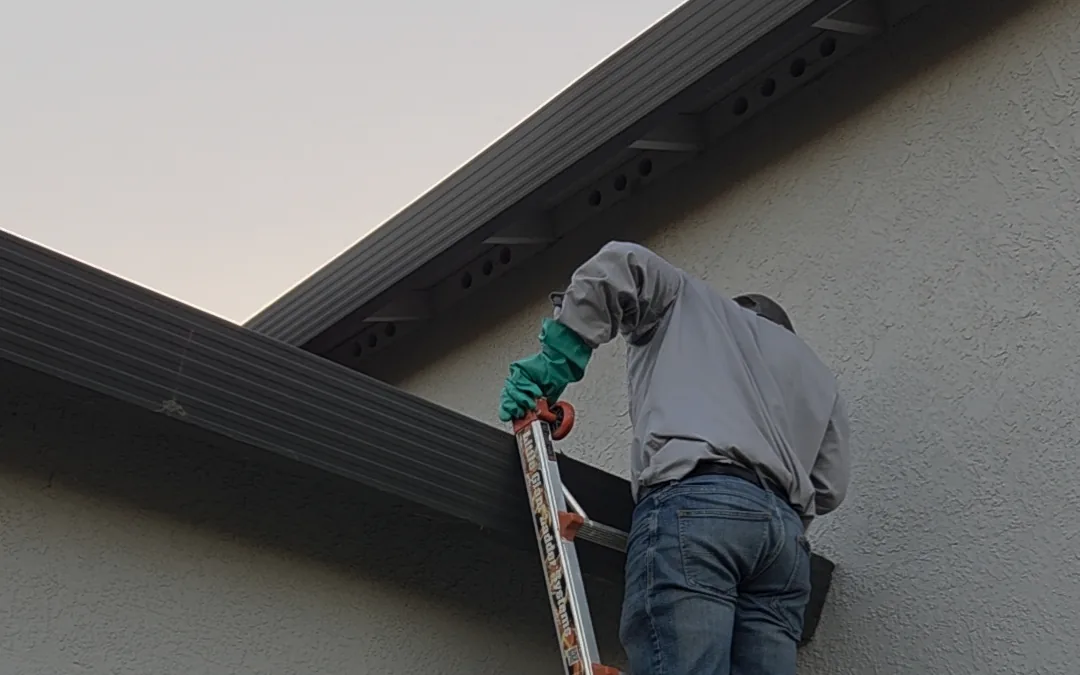
Scratching in the ceiling at night is one of the rat signs UC IPM lists. If the noise in your Roseville house is overhead, the notes point to the roof rat: it climbs, nests up high, and indoors favors attics, wall voids, false ceilings and cabinets.
Roof rats are a job for rodent exclusion: finding the openings they use, many of them above ground level, and closing them. Our rodent exclusion service does that work, and it starts with a rodent inspection of the attic, crawlspace, roofline, vents and garage.
Below is how to tell a roof rat from the other common rat, what to look for around a Roseville yard, what the City asks of property owners, and why sealing the house matters more than the number of traps.
Roof rat or Norway rat?
UC IPM’s Pest Notes on rats describe two introduced species found in almost every California city. The roof rat is the smaller, sleeker one, and its tail is longer than its head and body combined. The Norway rat is stockier, burrows along foundations and under woodpiles, and indoors tends to stay on the ground floor.
Roof rats usually live above ground in shrubs, trees and dense vegetation such as ivy. The same notes say residential areas with mature landscaping make good habitat, and so does vegetation along rivers and streams. Several creeks run through Roseville, including Dry Creek, Linda Creek, Secret Ravine and Cirby Creek.
The Placer Mosquito & Vector Control District, which covers Roseville, describes the roof rat the same way and adds that it prefers warmer, ocean-influenced climates. UC IPM notes that its documented range is expanding.
Signs to look for around a Roseville house
UC IPM says rats are active all year, so it suggests checking for signs in every season. The ones that point to roof rats in particular:
- noises from the attic or a drop ceiling, mostly at night
- rats running along overhead utility lines or fence tops at dusk or soon after
- hollowed-out orange rinds still hanging on the tree, or lemons with the rind eaten and the flesh left behind
- smudge marks where fur rubs against beams, rafters and pipes
- droppings near pet food, in the garage behind boxes, or in the recycling bin
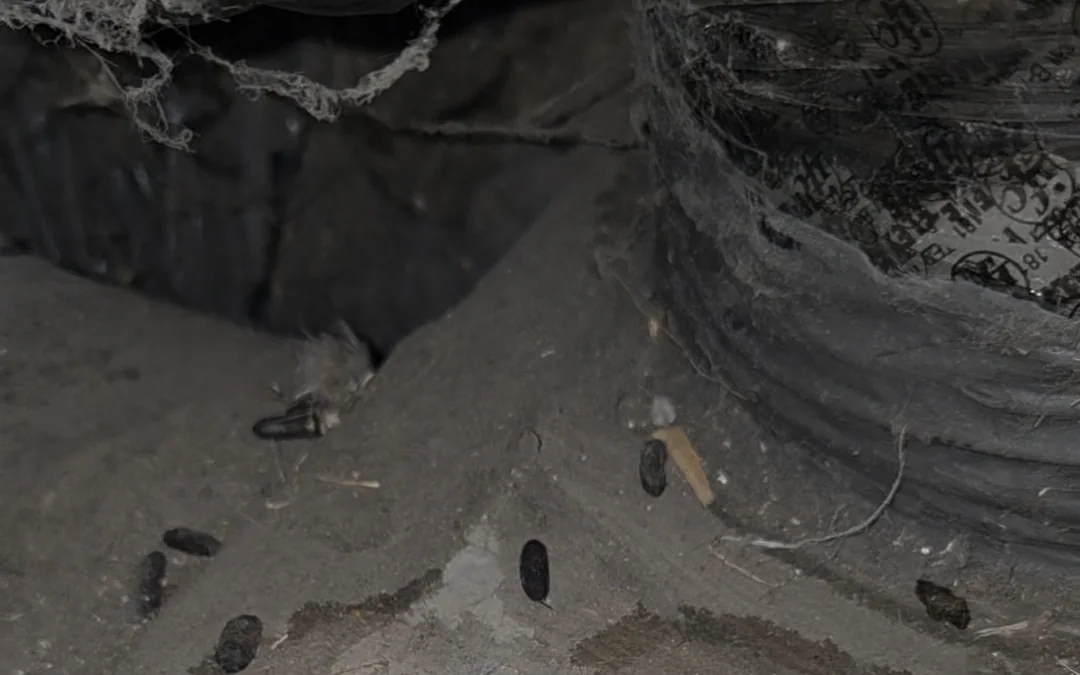
Gnaw marks help with the rat or mouse question. UC IPM puts a rat’s tooth marks at about 1/6 inch wide and a mouse’s at about 1/12 inch. In an attic the gnawing is more than a nuisance: the notes say roof rats there can cause electrical sparks and fires.
Roof rats also travel. UC IPM says they routinely go 300 feet or more for food, so a rat can nest in one yard and feed on the fruit trees next door.
What the City of Roseville asks of property owners
A City of Roseville Code Enforcement handout on rats (dated February 2014) quotes Roseville Municipal Code 10.54.020. It makes it a public nuisance to keep a property with overgrown, dead or decayed trees, weeds or other vegetation that is likely to harbor rats.
The handout’s own list for preventing an infestation:
- trim and remove dense brush, ivy, shrubs and weeds
- keep trash cans closed, and store animal food in airtight containers
- pick up fallen fruit and nuts
- stack firewood 18 inches off the ground and away from the house
- check the screens on crawl spaces, roof vents and attics, and repair damaged ones
UC IPM adds a few roof-rat specifics. Cut back tree limbs within 6 feet of the roof. Thin or remove ivy, star jasmine and honeysuckle growing on fences or walls. Keep dense shrubs like pyracantha and juniper at least 2 feet from the house. Roof rats return to the same nest sites, the notes say, so a nest left in place tends to be used again.
For public health questions the Placer district gives advice, and in severe cases it will inspect. It says it does not do rodent baiting or trapping, so the work on your own house falls to you or a pest control company.
Why sealing the house comes before traps
UC IPM calls exclusion the most successful and longest-lasting rat control. The guidance is to seal every hole larger than 1/4 inch with steel wool, wire screen or sheet metal, because rats chew through plastic, foam, wood and caulk. Vent covers take galvanized mesh with 1/2-inch openings.
Roof rats make this slower. The notes say openings above ground level have to be plugged too, and finding a roof rat’s way in usually takes longer than a Norway rat’s. If the rats are using overhead utility wires, UC IPM suggests calling a pest professional or the utility company.
Traps still have a place once the house is closed. For roof rats, UC IPM says to set them off the ground as well as on it: ledges, shelves, branches, fences, pipes and overhead beams. Rats avoid new objects, and the notes say roof rats more than Norway rats, so traps and bait stations can sit untouched for days or weeks. One strategy UC IPM gives is to leave traps baited but unset until the bait has been taken several times.
On baits, California now prohibits most uses of anticoagulant rodenticides, and almost all bait used in and around a house has to be in a bait station. UC IPM also says to close entry points before baiting outside, so a poisoned rat does not come inside to die.
How our rodent visit works for a Roseville home
The inspection comes first. A technician checks the attic, crawlspace, roofline, vents and garage for active entry points, and you get a plain list of what was found and where before any pricing. Exclusion is then quoted on what is actually open, because a few gaps is a small job and an open crawlspace plus a damaged roofline is a bigger one.
All three of our plans list rats and mice as covered. Every plan also lists roof rat infestations as an exclusion, which is why roof rat work is quoted as rodent exclusion after the inspection. For the rest of what we treat in town, see pest control in Roseville.
Before the visit, note where you hear the noise and at what time, and where any droppings are. Do not sweep or vacuum droppings: the Placer district’s guidance is to wear gloves, spray a disinfectant and wet-mop instead.
Sources: UC IPM Pest Notes: Rats (UC ANR Publication 74106). Placer Mosquito & Vector Control District: Rodents. City of Roseville Code Enforcement Program, “Do You Have Rats?” (February 2014). Creek names: Roseville, California on Wikipedia. All were checked 13 October 2026.
Hearing something in the attic? Request a quote through our contact page or call (916) 818-3863, Monday to Saturday, 7am to 6pm.
Related: rodent exclusion vs. trapping. More pest control guides

Residential and commercial pest control. Local technicians treating homes and businesses across Sacramento and the surrounding area.
Services
Service areas
Contact
- Summit Pest Control
- (916) 818-3863
- info@summit-pest-control.com
- 432 Todhunter Ave, West Sacramento, CA 95605
Serving the Sacramento area - Mon-Sat: 7am - 6pm
© 2026 Summit Pest Control. All rights reserved.