Sacramento pest calendar: which pests show up in each season
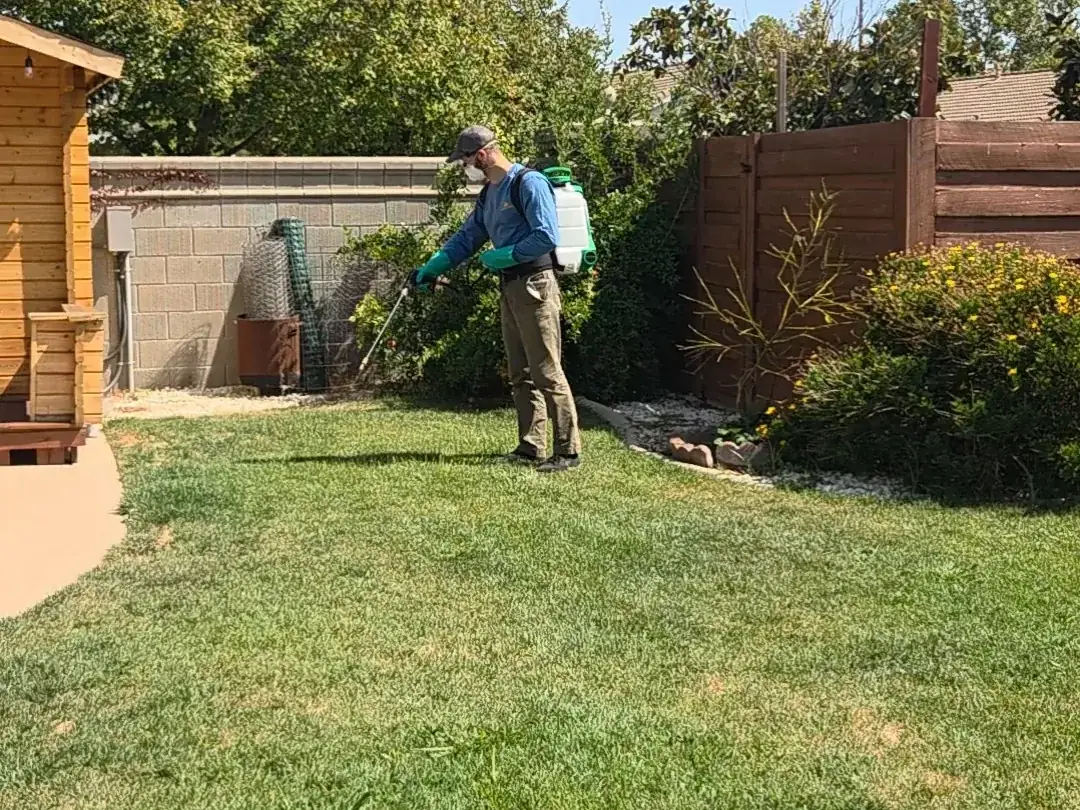
Sacramento’s pest year follows its weather: a cool, wet winter, then a long, dry, hot summer. This calendar sets NOAA’s 1991-2020 climate normals for Sacramento beside the UC IPM Pest Notes and the Sacramento-Yolo Mosquito and Vector Control District, season by season.
If something on the list is already inside, our general pest control plans cover ants, spiders, wasps, roaches, rats and mice, and each season below links to the service page with the detail.
Prices for those plans are in our guide to how much pest control costs in Sacramento.
Sacramento’s weather, month by month
The figures below are NOAA’s 1991-2020 monthly normals for the SACRAMENTO 5 ESE station (USW00023271), in degrees Fahrenheit and inches.
| Month | Normal high | Normal low | Rain (in) | Days at 90°F or more |
|---|---|---|---|---|
| January | 56.5 | 41.1 | 3.87 | 0 |
| February | 62.2 | 43.7 | 3.63 | 0 |
| March | 67.8 | 46.7 | 2.82 | 0 |
| April | 73.5 | 49.3 | 1.44 | 1.2 |
| May | 81.3 | 54.0 | 0.86 | 6.6 |
| June | 89.0 | 58.7 | 0.21 | 14.8 |
| July | 94.4 | 61.4 | 0.00 | 24.0 |
| August | 93.5 | 61.0 | 0.02 | 23.5 |
| September | 89.3 | 58.8 | 0.15 | 16.3 |
| October | 78.9 | 52.9 | 0.93 | 3.5 |
| November | 65.3 | 45.3 | 1.78 | 0 |
| December | 56.4 | 40.7 | 3.49 | 0 |
Over a normal year that station logs 19.2 inches of rain, about 90 days at 90°F or hotter and 22.6 days at 100°F or more. July has the hottest normal high, 94.4°F, and December has the coldest normal low, 40.7°F.
Sacramento Executive Airport (USW00023232) runs a little cooler: 75.6 days at 90°F or more and 18.14 inches of rain a year. Either way, nearly all the rain falls between October and May, and the normal for July is 0.00 inches.
UC IPM ties several pests to that pattern. Ants come indoors in hot, dry weather or when the ground floods, and some burrowing spiders wander during the rainy season after their burrows get wet.
Winter: December to February
Normal highs sit between 56.4°F and 62.2°F, and each of the three months brings 3.49 to 3.87 inches of rain over roughly 10 wet days.
- House mice. UC IPM says mice living outdoors frequently enter homes in autumn as nights get colder, and with steady food and shelter they breed all year. Droppings in a garage, a pantry or the attic are the sign to book a rodent inspection.
- Rats. The UC IPM rats note says rats are active throughout the year and should be checked for periodically. Roof rats nest in attics and in the hollow spaces inside walls and ceilings.
- Ants. Flooded ground after heavy rain is one of the reasons UC IPM gives for ants moving indoors. It also says treatments made in late winter and early spring, while colonies are just starting to grow, work best, which is the time to book ant control.
- Ticks. For central and southern California, UC IPM says adult ticks look for hosts from late November until late April or early May. The Sacramento-Yolo district names the western black-legged tick as the local carrier of Lyme disease.
Ticks do not fly or jump. The district says they wait on the tips of vegetation in grassy, brushy or wooded areas and grab on as a person or animal brushes past; to remove one, grip its mouthparts with tweezers as close to the skin as possible and pull straight out with steady pressure.
Silverfish follow the warm spots in a house. UC IPM says they turn up in attics during the summer and around the furnace in winter.
Spring: March to May
Normal highs climb from 67.8°F in March to 81.3°F in May, and rain drops from 2.82 inches to 0.86. May brings the first hot spell, with 6.6 days at 90°F or more in a normal year.
- Yellowjackets. UC IPM says the queen comes out in late winter to early spring to start a new nest, and from spring to midsummer the colony is growing. Traps work best as queen traps in late winter and early spring, before the colony builds.
- Fleas. Fleas are on pets all year, but UC IPM says their numbers tend to rise sharply in spring and early summer. Vet-prescribed spot-on or oral products started early in the year, before numbers build, can keep fleas from settling into the house.
- Ants. UC IPM says protein baits attract Argentine ants mainly in spring, while sweet baits attract them all year. The Argentine ant is the most common ant in and around California homes.
- Mosquitoes. The district lists Aedes melanimon as most active in spring and fall, and the inland floodwater mosquito as active from early spring through late fall.
Warm weather also brings out winged ants, which UC IPM says leave the nest in large numbers to mate and start new colonies, and which are often misidentified.
Our guides on ants that keep coming back to the kitchen and getting rid of fleas in the house go further into both.
Summer: June to August
Normal highs run from 89.0°F in June to 94.4°F in July, July and August each average about 24 days at 90°F or more, and July’s normal rainfall is zero.
- Mosquitoes. The district says Culex tarsalis and Culex pipiens, both West Nile carriers, are most active in summer and fall. In peak summer heat some mosquitoes go from egg to adult in 4 to 7 days, though about 14 days is average.
- Ants. Hot, dry weather is the other reason UC IPM gives for ants coming indoors, looking for water and refuge. Spraying them indoors will not stop more from entering, the same note says.
- Flies. UC IPM says house flies are generally found in greatest numbers in the hotter summer months, and can go from egg to adult in as little as 7 days.
- Yellowjackets. Foragers can become a nuisance in parks and campgrounds during the summer, per the district. By late summer UC IPM says colonies slow or stop growing and the workers go after sweet foods.
For mosquitoes, standing water is what to manage. The district says anything that holds water for more than five to seven days can produce them, that they need as little as half an inch, and that one neglected swimming pool can produce millions.
The district’s prevention list starts with draining standing water and avoiding the outdoors at dawn and dusk. Our mosquito water check walks through the yard spots to look at, and mosquito control covers what we treat.
West Nile virus is established in Sacramento and Yolo counties, according to the district. Its 4 September 2026 release said activity this season had been intense and widespread across both counties, with nine human cases reported in Sacramento County by that date.
UC IPM notes that outdoor lights draw insects and the insects draw spiders, and black widows favor woodpiles and garages; our guide to black widow spiders in Sacramento covers safe clearing.
Fall: September to November
September still averages 16.3 days at 90°F or more and a normal high of 89.3°F. October cools to 78.9°F with 0.93 inches of rain, and November’s normal low falls to 45.3°F.
- Yellowjackets. In fall, UC IPM says foraging yellowjackets turn into scavengers at picnics, barbecues, garbage cans, outdoor pet food and ripe fruit. Defensive behavior increases as colonies get bigger and food gets scarcer.
- House mice. This is the season UC IPM names for mice moving into homes, as nighttime temperatures drop. The normal low falls from 58.8°F in September to 52.9°F in October.
- Mosquitoes. UC IPM says West Nile outbreaks usually start in summer and continue into autumn. Culex mosquitoes stay active through the fall.
- Spiders. When the rain returns, UC IPM says some burrowing spiders wander after abandoning wet burrows, and a wandering spider can end up indoors by accident.
A yellowjacket nest inside a wall or under the eaves is a job for wasp and hornet removal. The Sacramento-Yolo district can sometimes treat nests in the ground or in trees, but it says it cannot treat one that has gone into the structure of a house.
For mice, UC IPM calls exclusion the most successful and permanent form of control, and says house mice can squeeze under a gap a quarter inch tall. Our guides on field mice in the house and what attracts wasps cover the fall checks in more detail.
Pests that do not keep a season
A few pests show up any month, so they are worth checking for whatever the calendar says.
- Bed bugs. UC IPM says they arrive in luggage or on clothes after a stay somewhere infested, and that confirmed infestations should be managed by trained professionals. Our guide on how to tell if you have bed bugs lists the signs.
- German cockroaches. UC IPM says German and brownbanded cockroaches live and breed entirely indoors. Our cockroach control page explains how roach work is handled.
- Outdoor cockroaches. The Turkestan cockroach is displacing the oriental cockroach in the Central Valley, UC IPM says, and lives in spots such as water meter boxes.
- Black widows. UC IPM’s widow spider note says spiderlings drop onto a property continually, so clearing them is a task to repeat through the year.
Roof rats belong on this list too, since UC IPM says rats are active all year. A rodent exclusion job is quoted after an inspection and starts at $500. Our rodent control in Sacramento page has the details for a home in the city.
Questions about pest seasons in Sacramento
What season are pests most active?
It depends on the pest. In Sacramento, the Sacramento-Yolo district says Culex mosquitoes are most active in summer and fall, UC IPM puts house flies at their peak in the hot summer months, and UC IPM says house mice tend to move indoors in autumn.
What month are mosquitoes most active in California?
Around Sacramento, the district says the two main West Nile carriers, Culex tarsalis and Culex pipiens, are most active in summer and fall, though both can be found year-round. UC IPM says West Nile outbreaks usually start in summer and continue into autumn.
What time of year do yellowjackets come out?
UC IPM says the queen comes out in late winter to early spring to start a nest, and the colony grows from spring to midsummer. In late summer and fall the workers go after sweet food and scavenge around picnics and garbage cans.
What time of year is worst for rats?
UC IPM says rats are active throughout the year, so it recommends checking for signs periodically. House mice are the seasonal ones: they frequently enter homes in autumn when nighttime temperatures get colder.
What month are roaches the worst?
UC IPM does not name a month. German and brownbanded cockroaches live and breed entirely indoors, so they can turn up in any season, while the Turkestan cockroach lives outdoors in places like water meter boxes.
Is there a spider season in California?
UC IPM says some burrowing spiders wander during the rainy season after their burrows get wet. For black widows, its widow spider note says new spiderlings land on a property continually, so clearing them is a job to repeat through the year.
What month does it start to cool down in Sacramento?
It starts in October. On NOAA’s 1991-2020 normals for the SACRAMENTO 5 ESE station, the normal high drops from 89.3 degrees in September to 78.9 in October, and days at 90 degrees or more fall from 16.3 to 3.5.
Is it dog flea season?
Fleas can be found on pets all year, according to UC IPM, but their numbers tend to rise sharply in spring and early summer. The flea on California dogs and cats is most likely the cat flea.
Sources, checked 7 October 2026: NOAA NCEI 1991-2020 monthly normals, SACRAMENTO 5 ESE and SACRAMENTO EXECUTIVE AP; UC IPM Pest Notes on ants, fleas, spiders, widow spiders, yellowjackets, mosquitoes, bed bugs, flies, cockroaches, silverfish, house mice, rats and Lyme disease in California; the Sacramento-Yolo Mosquito and Vector Control District pages on mosquitoes, reducing mosquitoes, pools, West Nile virus, yellowjackets, ticks and service requests, and its 4 September 2026 release.
Seeing one of these now? Request a quote through our contact page or call (916) 818-3863, Monday to Saturday, 7am to 6pm.

Residential and commercial pest control. Local technicians treating homes and businesses across Sacramento and the surrounding area.
Services
Service areas
Contact
- Summit Pest Control
- (916) 818-3863
- info@summit-pest-control.com
- 432 Todhunter Ave, West Sacramento, CA 95605
Serving the Sacramento area - Mon-Sat: 7am - 6pm
© 2026 Summit Pest Control. All rights reserved.